A few months ago sudden cracks started appearing in the US economy hinting of an end to years of economic expansion. It only took a short while before the whole US, and subsequently the global financial systems started crumbling, sending shockwaves around the world.
The media is full of analyses and commentaries about possible reasons and for the collapse of the banking system and the economic downturn. There is not a day that goes by without debate on whether we are paying for our excesses or that we are unfortunate victims of the greed of a select few. Such debates are necessary. In fact, it’s incredible to analyze and find out why an institution like Bear Sterns went from having $18 billion on the books to a deficit of $30 billion in one week. Such a dramatic freefall warrants investigation.
What’s more interesting, however, is the simplicity of the problem. The fact that most people start pointing fingers during hard times is only normal but to get a real understanding of the events, one needs to sit back and determine the role that each and every one of us including our government has played in creating this mess. The fact is, that the heart of the capitalist society beats by spending and that every aspect of our government and our economy has been designed to encourage spending. For years all of us developed the habit of spending more than our means. Every time we desired something and could not afford it, we took on debt to pay for our consumption. The government, on the other hand, would reduce interest rates at the first sign of any distress, artificially boosting valuations for years. As such, we were able to afford to make bad financial decisions. The value of our homes would jump 20% per year, fueled by speculation and low borrowing costs. Eventually all this needed to stop and stop it did.
As Fareed Zakaria mentioned in the 10/20/2008 issue of the Newsweek magazine: “Under Alain Greenspan the Federal Reserve obstinately refused to inflict any pain. Russian default? Cut interest rates. Worried about Y2K? Cut interest rates. NASDAQ crash? Cut rates. The economy slows after 9/11? Cut rates.” The final blow to the hole system was the prolonged boost that was given to the housing market spinning the problem so far that it was almost impossible to tackle.
Like any responsible society, we now need to look at where we stand and where we want to be tomorrow. It’s not constructive anymore to find someone to blame for the problem. What’s constructive is to envision a future for us where we can live respectfully within the international community: Less arrogant and more productive. Mistakes of previous administrations have been made and the damage is already done but the US is still a large, efficient, modern, and vibrant economy. It is still the wealthiest economy in the world. As Zakaria mentioned: “It’s a different world out there. If Iraq cast a shadow on US political and military credibility, this financial crisis has eroded America’s economic and financial power. In the short run, there has been a flight to safety but in the long run, countries are likely to gain greater independence from an unstable superpower. The United States will now have to work to attract capital to its shores, and manage its fiscal house better. We will have to persuade countries to join in our foreign endeavors. We will have to make strategic choices. We cannot deploy missile interceptors along Russia’s borders, draw Georgia and Ukraine into NATO, and still expect Russian cooperation. We cannot noisily denounce Chinese and Arab foreign investments in America one day and then hope that they will keep buying $4 billion worth of T-bills another day. We cannot keep preaching to the world about democracy and capitalism while our own house is wildly out of order.”
Showing posts with label arab investment. Show all posts
Showing posts with label arab investment. Show all posts
Wednesday, October 15, 2008

Saturday, March 29, 2008
Another Consequence of High Priced Oil: Large Sums of US Assets Purchased by Arab Gulf States Flush with Petroleum Dollars
In September 2007 in a complex set of transactions, Dubai proposed to acquire 19.9 percent of the NASDAQ, placing the Arab nation in an ownership position of a key US stock exchange. Earlier in the year through the state owned holding company for Dubai Financial Market (DFM) and Dubai International Financial Exchange (DIFX), Borse Dubai, the country announced a public all-cash offer to the shareholders of OMX AB, the Nordic Stock Exchange, headquartered in Stockholm Sweden.
This recent acquisitions of ownership in US and European entities by private and state-owned Middle Eastern entities are just part of the flood of oil wealth spilling from the region. Middle Eastern investments in the United States have been on the rise since mid 2006 and have been showing constant gains since the tense period following September 11, 2001. While some of these takeovers are triggering alarm, most famously the purchase by Dubai Ports World of a seaports management firm, others are evoking warm welcomes.
One of the most prominent figures behind the recent wave of expansions and acquisitions is the ruler of Dubai and the Prime Minister and Vice President of the United Arab Emirates, Sheikh Mohammed bin Rashid Al-Maktoum. A visionary and an entrepreneur, he has spent decades carefully shaping Dubai as a hub for trade and investments in the Middle East. Dubai has been transformed from a small city-state to one of the world's premier business center and tourist destination. Incentives like establishment of free trade zones have resulted in exponential growth of business activity in the Emirate.
It is noteworthy, however, that Dubai is only one of the states in the region with a success story. While Dubai owes most of its growth to Sheikh Mohammed's vision and not to a great extent to its oil wealth, other states in the region have great amounts of accumulated petroleum wealth. The rush of these petro dollars is creating enormous private and public wealth and reshaping regional businesses and society. A small portion of this wealth is being invested regionally but a great majority of it is being funneled back to the US in form of investments and joint ventures with Western entities.
Some notable acquisitions in 2006 include a $1 billion portfolio of 21,000 apartments in the US Sun Belt cities; a 2.2 percent stake in the automotive giant DaimlerChrysler AG; and a Manhattan landmark building. In March of 2006, we witnessed news of another Dubai acquisition of plants in Georgia and Connecticut that make precision components used in engines for military aircraft and tanks that drew scrutiny from the Bush administration because of national security risks.
As recently as July of 2007, Dubai International Capital, the private equity firm of Sheikh Mohammed announced plans to open an office in the United States as it seeks to add American companies to its European-focused portfolio. Speaking to the New York Times, Dubai International's CEO, Sameer al-Ansari, said, “it is very important for us to find and execute deals in the US, as we're trying to create a diversified portfolio.” Dubai International has acquired minority stakes this year in European Aeronautic Defense and Space, the parent company of Airbus; HSBC Holdings; and the Icici Bank of India. Five Fortune 500 companies are on a short list for possible investments and about 15 are on a close watch list, Mr. Ansari added.
Not all of such acquisition proposals are dealt with skepticism. The disclosure, several months ago, that Dubai Investment Group had acquired the Essex House hotel in Manhattan and promised to spend $50 million into renovating it, prompted New York City Mayor, Michael Bloomberg to exult: “Another iconic hotel overlooking Central Park will be preserved and its unionized workforce protected. This is excellent news for New York's tourism and hospitality.”
So what does all this mean for US businesses? Besides the obvious opportunities in raising capital through Middle Eastern funds, it is important to understand the forces behind the emerging interest in US businesses. Behind such transactions are two powerful forces. One, of course, is the high price of energy, which has left several oil-producing Arab countries swimming in cash. The other is the burgeoning U.S. trade deficit, $726 billion last year, which means that the United States needs foreign capital; a country that imports more than it exports must cover the gap with money from abroad.
Until now, investments in the United States from Europe and other parts of Asia have dwarfed those from the Middle East. But an increasing share of the foreign money required to fuel the U.S. economy is likely to come from places that, like Dubai, trigger visceral reactions among Americans seared by memories of the Sept. 11 attacks.
"The price of oil is going only one way, up, for the next five years, because it is going to take at least that long for alternatives to kick in," said Youssef M. Ibrahim, managing director of the Strategic Energy Investment Group, a consulting firm based in Dubai. "So there is no question in my mind that billions of dollars will continue flowing this way, and people cannot handle all of that kind of money here. You've got to circulate the money, and the United States is still the biggest market."
Already, the list of U.S. businesses owned by Arab investors, not just from Dubai, includes some well-known names. Among them are Caribou Coffee Co., the fast-growing rival to Starbucks Corp.; Church's Chicken, a fast-food concern; Loehmann's, a specialty retailer; TLC Health Care Services Inc., a provider of home nursing and hospice care; and even several financial publications, including the American Banker.
Such "direct" investment in hard assets (companies, factories and real estate) is generally preferable for the U.S. economy, in the view of most economists, to foreign investment in bonds, stocks and other financial assets. One advantage of direct investments is that they cannot be dumped in a panic the way that a Treasury bond can. Moreover, they often involve high-wage jobs. Average annual compensation per worker at U.S. subsidiaries of foreign companies is about $60,500, 34 percent higher than the rate at all U.S. companies, according to the Organization for International Investment.
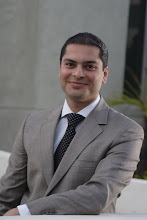
Author: Nima Montazeri
Managing Director
Floyd Associates
This recent acquisitions of ownership in US and European entities by private and state-owned Middle Eastern entities are just part of the flood of oil wealth spilling from the region. Middle Eastern investments in the United States have been on the rise since mid 2006 and have been showing constant gains since the tense period following September 11, 2001. While some of these takeovers are triggering alarm, most famously the purchase by Dubai Ports World of a seaports management firm, others are evoking warm welcomes.
One of the most prominent figures behind the recent wave of expansions and acquisitions is the ruler of Dubai and the Prime Minister and Vice President of the United Arab Emirates, Sheikh Mohammed bin Rashid Al-Maktoum. A visionary and an entrepreneur, he has spent decades carefully shaping Dubai as a hub for trade and investments in the Middle East. Dubai has been transformed from a small city-state to one of the world's premier business center and tourist destination. Incentives like establishment of free trade zones have resulted in exponential growth of business activity in the Emirate.
It is noteworthy, however, that Dubai is only one of the states in the region with a success story. While Dubai owes most of its growth to Sheikh Mohammed's vision and not to a great extent to its oil wealth, other states in the region have great amounts of accumulated petroleum wealth. The rush of these petro dollars is creating enormous private and public wealth and reshaping regional businesses and society. A small portion of this wealth is being invested regionally but a great majority of it is being funneled back to the US in form of investments and joint ventures with Western entities.
Some notable acquisitions in 2006 include a $1 billion portfolio of 21,000 apartments in the US Sun Belt cities; a 2.2 percent stake in the automotive giant DaimlerChrysler AG; and a Manhattan landmark building. In March of 2006, we witnessed news of another Dubai acquisition of plants in Georgia and Connecticut that make precision components used in engines for military aircraft and tanks that drew scrutiny from the Bush administration because of national security risks.
As recently as July of 2007, Dubai International Capital, the private equity firm of Sheikh Mohammed announced plans to open an office in the United States as it seeks to add American companies to its European-focused portfolio. Speaking to the New York Times, Dubai International's CEO, Sameer al-Ansari, said, “it is very important for us to find and execute deals in the US, as we're trying to create a diversified portfolio.” Dubai International has acquired minority stakes this year in European Aeronautic Defense and Space, the parent company of Airbus; HSBC Holdings; and the Icici Bank of India. Five Fortune 500 companies are on a short list for possible investments and about 15 are on a close watch list, Mr. Ansari added.
Not all of such acquisition proposals are dealt with skepticism. The disclosure, several months ago, that Dubai Investment Group had acquired the Essex House hotel in Manhattan and promised to spend $50 million into renovating it, prompted New York City Mayor, Michael Bloomberg to exult: “Another iconic hotel overlooking Central Park will be preserved and its unionized workforce protected. This is excellent news for New York's tourism and hospitality.”
So what does all this mean for US businesses? Besides the obvious opportunities in raising capital through Middle Eastern funds, it is important to understand the forces behind the emerging interest in US businesses. Behind such transactions are two powerful forces. One, of course, is the high price of energy, which has left several oil-producing Arab countries swimming in cash. The other is the burgeoning U.S. trade deficit, $726 billion last year, which means that the United States needs foreign capital; a country that imports more than it exports must cover the gap with money from abroad.
Until now, investments in the United States from Europe and other parts of Asia have dwarfed those from the Middle East. But an increasing share of the foreign money required to fuel the U.S. economy is likely to come from places that, like Dubai, trigger visceral reactions among Americans seared by memories of the Sept. 11 attacks.
"The price of oil is going only one way, up, for the next five years, because it is going to take at least that long for alternatives to kick in," said Youssef M. Ibrahim, managing director of the Strategic Energy Investment Group, a consulting firm based in Dubai. "So there is no question in my mind that billions of dollars will continue flowing this way, and people cannot handle all of that kind of money here. You've got to circulate the money, and the United States is still the biggest market."
Already, the list of U.S. businesses owned by Arab investors, not just from Dubai, includes some well-known names. Among them are Caribou Coffee Co., the fast-growing rival to Starbucks Corp.; Church's Chicken, a fast-food concern; Loehmann's, a specialty retailer; TLC Health Care Services Inc., a provider of home nursing and hospice care; and even several financial publications, including the American Banker.
Such "direct" investment in hard assets (companies, factories and real estate) is generally preferable for the U.S. economy, in the view of most economists, to foreign investment in bonds, stocks and other financial assets. One advantage of direct investments is that they cannot be dumped in a panic the way that a Treasury bond can. Moreover, they often involve high-wage jobs. Average annual compensation per worker at U.S. subsidiaries of foreign companies is about $60,500, 34 percent higher than the rate at all U.S. companies, according to the Organization for International Investment.
Author: Nima Montazeri
Managing Director
Floyd Associates
Subscribe to:
Posts (Atom)