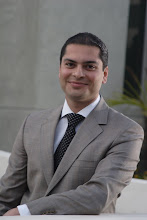
In recent months global banks have increasingly shifted their resources and management to the Middle East in the face of financial turmoil elsewhere. Deutsche Bank was the latest to announce the move of senior banker, Christophe Laing, to the Dubai International Financial Center. Laing is head of Deutsche Bank’s equity capital markets for the Middle East and Africa as well as Eastern Europe.
Financial institutions around the world have written down around $400 billion as a result of the credit crunch and have raised $300 billion to repair their balance sheets. Shifting to the Middle East and committing to the oil-rich region is an obvious move to become closer to the riches of funds and governments in the area.
Others who have recently appointed senior management to the Middle East are Lehman Brothers, Citi, and Merrill Lynch. The major incentive is being close to sovereign wealth funds and their seemingly endless pool of capital. Estimates show that these funds shall grow to $15 trillion by 2016.
Saturday, July 12, 2008

Monday, June 30, 2008
Emerging Markets and Global Inflation
Despite the rising “decoupling” discussion of the U.S. economy and the emerging markets, it is irrefutable that the sub-prime mortgage crisis and rising global inflation are due partly to large capital flows from Asian economies and oil-rich Middle Eastern sates to US assets. Such capital flows are designed to prevent the currencies of such Asian and Middle Eastern countries from rising and create demand for US bonds, regarded by those economies as a safe asset, increasing prices of those bonds and depressing the yields. Lower rates translate into cheap money and, with the Federal Reserve more concerned about recession than it is about inflation, the result is a loose monetary policy that is responsible for the melt down of the US credit markets. Cheap imports from China and other Asian countries have granted the central banks in rich countries the luxury to worry less about inflation while keeping rates low.
Now that the US economy has entered a downturn, the direction of these capital flows has reversed and those countries that have linked their currencies to the US Dollar are being subject to the loose monetary policy of the Federal Reserve, despite their overheating economies. This in-turn causes price rises in those economies due to low interest rates that might be suitable for the US economy at its current state but not for the overheating Asian and Middle Eastern economies. Add the high prices of oil and other commodities to the equation and the result is an inevitable global inflation that is poised to threaten growth globally.
The overvaluation of currencies has sparked talks in many Middle Eastern circles of re-valuation of local currencies. An alternative scenario would be changing their currency pegs from the US Dollar to Euro. While the latter is less likely, it cannot be ruled out entirely. Only time will tell how ultimately the capital flow to and from the emerging economies will affect global inflation. What’s known is that so far it has been partially, if not significantly, responsible for it.
Saturday, June 21, 2008
Diversification, Diversification, and then again Diversification
In the previous post, I mentioned how GCC States have fueled their exponential growth with an immigrant labor force that is now demanding more compensation and is creating an imbalance in the labor markets where the private sector is less inclined to hire nationals.
One possible solution to the problem, is already being investigated and, in some cases, implemented in the region. The basic assumption is that by investing their huge oil wealth in other industries and by simultaneous investment in educating and training their younger generation, the GCC countries can create industries that can be competitive on a global scale and can be run by the skilled force of their nationals.
A bold initiative along these lines is the Masdar Institute of Science and Technology by the Government of Abu Dhabi. It involves substantial investments aimed at fostering clean technology ideas from research to commercialization. Projects like this are channels to divert the oil wealth to alternative industries in which the regional countries can emerge as global pioneers and leaders. If such high risk, high reward projects come to fruition we might see a future Gulf that is way more diversified than the one we know today. It can be more than just one of wealthiest areas in the world in terms of its petroleum income and act as a power center for development and deployment of intellectual capital and breakthrough technologies. Only time can show us what the outcome will be.
Thursday, May 29, 2008
Cheap Immigrant Work Force and Imbalanced Labor Markets
Countries in the Gulf Cooperation Council (GCC) face a tricky situation. For years cheap imported labor from India, Bangladesh, Pakistan, and other countries has been providing a seemingly unlimited factor of production. That source, however, has recently realized its contribution to regional growth and has dared to ask for more compensation. Such claims have been supported by the government of the countries supplying labor to GCC countries as well.
Interestingly, some GCC countries have voluntarily engaged in practices to make immigrant labor more expensive in a bid to make the labor markets more competitive. Bahrain, for example, will be charging a visa fee and a per-head levy on foreign labor. GCC nationals like the lifestyle that they enjoy, which is mostly made possible by the work of migrant workers. What they don’t like is the competition it creates in the labor markets. Nationals are predominantly hired in artificial government positions and benefit from distribution of Petrodollars. This is while the private sector does not compete with the government to match salaries and instead hires immigrants for a fraction of the cost. The trick is to find the benefits that foreign labor brings and match them against the costs of unemployment (or employment in quazi positions) of local labor force.
Interestingly, some GCC countries have voluntarily engaged in practices to make immigrant labor more expensive in a bid to make the labor markets more competitive. Bahrain, for example, will be charging a visa fee and a per-head levy on foreign labor. GCC nationals like the lifestyle that they enjoy, which is mostly made possible by the work of migrant workers. What they don’t like is the competition it creates in the labor markets. Nationals are predominantly hired in artificial government positions and benefit from distribution of Petrodollars. This is while the private sector does not compete with the government to match salaries and instead hires immigrants for a fraction of the cost. The trick is to find the benefits that foreign labor brings and match them against the costs of unemployment (or employment in quazi positions) of local labor force.
Tuesday, May 6, 2008
The Wealth Effect: The Gulf’s Difficulty in Spending its Vast Revenues
The geographic span to the south of the Persian Gulf and to the west of the Indian Ocean is flushed with economic activity. The region is home to several landmarks including man-made islands and record breaking sky scrapers. The rapid social and economic growth that has affected the Gulf has transformed a vast region from small tribal economies to global financial and business players. Abu Dhabi, the capitol of the United Arab Emirates, for example, lacked even a paved road before 1961. Now, it is a wealthy community, with control over major petroleum reserves and multi-national firms are present in every corner.
Despite the rapid growth, regional economies are facing a major hurdle: Absorbing the petro-dollars the accumulation of which is beginning to clog their arteries. The six nations of the Gulf Cooperation Council (GCC) earned $381 billion in 2007 from exports of oil and $26 billion from gas according to Institute of International Finance. If oil remains at $100 a barrel they will reap a windfall of $9 trillion by 2020 according to McKinsey Global Institute. This is when in 2007 the combined GDP of the GCC was $800 billion in 2007. To avoid overheating a large part of this windfall is stored in foreign assets. Some goes to central banks and sovereign wealth funds while some end up with wealthy families. It all added up to $1.8 trillion by the end of 2007, by Institute of International Finance’s estimates.
In the 1990s low oil prices left petroleum producing countries with small revenues and the level of spending was subsequently adjusted to match such low revenues. As the oil prices rose higher revenues outpaced their ability to spend. Recently, however, the GCC states’ ambitions have grown to catch up with their greater means. According to the Middle Eastern Economic Digest, members of GCC have begun projects worth $1.9 trillion in 2007, 43% more than a year ago. It is remarkable how these countries are beginning to spend on themselves.
Dubai has the tiniest oil reserves of all the UAE emirates but has been very aggressive and effective in spending its wealth widely and building an infrastructure that has transformed the small emirate into the most luxurious place in the region. Dubai has made a point of exhibiting its wealth and in the process, attracting businesses and capital from around the world. This is in part due to its long term reliance on its guests. It is now more than just a municipality with oil revenues. It’s both a destination and a business hub simultaneously.
Saturday, April 26, 2008
Rumble in the Gulf
The Rich Economies in the Gulf are Experiencing their Fastest Growth in Decades
The rich economies of the Persian Gulf are experiencing their fastest growth in decades. Thanks to high oil prices and the growing demand in non-oil sectors, these economies have experienced growth rates of 5.5% to 6% in their gross domestic products since 2004 and 2008 in not expected to be any slower. Such high growth is by no means confined to Dubai or the UAE. It is vividly felt across all Gulf Cooperation Council (GCC) countries: Bahrain, Kuwait, Oman, Qatar, Saudi Arabia, and the United Arab Emirates.
In a symbol of the region’s upward reach, the Burj Dubai officially became the world’s tallest tower on February 5, 2008. “We have only seen the tip of the iceberg,” said Mr. Omar Bin Sulaiman, Governor of the Dubai International Financial Center. “There will be a bigger boom in the next 5 to 10 years, as people keep coming to the region from around the world,” he added.
In Dubai, the Dubai International Financial Center (DIFC) is home to 550 companies and is arguably the current center of financial activity in the region. During the current cycle of rising oil prices, the substantial windfall has not only been invested outside the region but also in the GCC countries. This is the main distinguishing factor between the current boon in the Persian Gulf region and previous ones. As a result the GCC countries have become a hub for regional business activity and a powerhouse for global financial and business deals. In Dubai, for example, the country’s tremendous success has had a spillover effect for the whole region. Due to the fundamental strength of the current boom in the Gulf region the current growth pattern is expected to continue well into 2009 and beyond.
The GCC represents more than half of all petroleum reserves of the Organization of Petroleum Exporting Countries (OPEC). Saudi Arabia, whose oil revenues are approaching $1 billion per day, is building refineries and petrochemical plants to get the most value our of every barrel of oil that is sold and to develop an infrastructure that can help expand oil production.
As for the future of the oil market, it is anticipated to remain tight partly due to the rising demand from rapidly growing economies of India and China. With today’s global economy and with the emergence of solid, strong, and rapidly growing economies in Asia, the strength of the GCC economies is poised for sustained and rapid growth in the coming years. The Middle Eastern economies are less susceptible to a slow down in the US, making their growth less vulnerable to the crisis in the US markets.
“Dubai is certainly a vibrant place that is growing exponentially and is already the base for many international institutions and support services. Bahrain is obviously marketing its new Marina Financial Center hard and has some interesting benefits as a center of excellence in the field of Shariah based investment,” said Ms. Imogen Dillon Hatcher, Managing Director of FTSE Europe, Middle East, and Africa.
“It is no secret that businesses are thriving to expand to the GCC countries. The obvious advantages of having a presence in the region bring a strong motivation for companies to establish an active presence there,” said Mr. Nima Montazeri, Managing Director at Floyd Associates. “Benefits of having activities in the GCC include access to a growing and healthy consumer market, proximity to the fastest growing and most prestigious financial market in the Middle East, and potential access to investment capital for both growth companies and investment houses around the world,” he added.
About Floyd Associates
Floyd Associates is a privately held consulting firm with expertise in corporate finance, business strategy, and mergers and acquisitions. Our expert team advises companies of various sizes on capital raising instruments, optimal capital structures, and formation of strategic alliances. Capitalizing on years of experience, the Company offers complete solutions customized to meet the specific needs of each of its clients. The Company intends to form long lasting relationships with its clients and to maximize shareholder value through optimization of capital structure and business planning. Solutions include equity financing, business expansion plans, global corporate finance solutions, and international trade strategies. To read more about Floyd Associates please visit http://www.floyd-associates.com/. If you have questions or comments, please contact us by email at info@floyd-associates.com or call us at: +1 (310) 300-0890.
Subscribe to:
Posts (Atom)